Home › Forums › Active Melody Guitar Lessons › Major pentatonic patterns
- This topic has 7 replies, 3 voices, and was last updated 7 months ago by
 Brendan G.
-
AuthorPosts
-
-
March 17, 2026 at 12:27 am #411116
Hi there,
I have found the patterns for the 5 minor pentatonic shapes with scales degrees on it but I can’t find the Major patterns. Can anyone help.BrendanG
-
March 17, 2026 at 7:25 am #411131
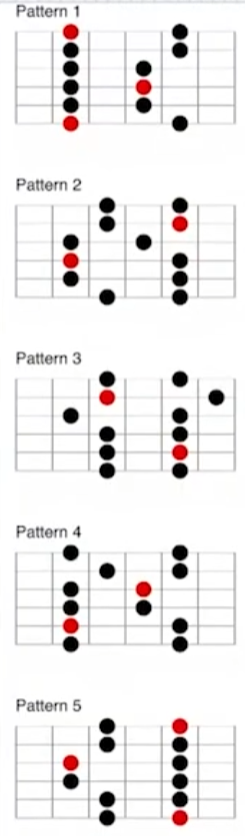
There are only five patterns, not ten. Each pattern can be either major or minor depending on where the root note is located within each of the patterns.
So if you know all five patterns, you only need to understand how the root notes change within the patters to give either major or minor scales.
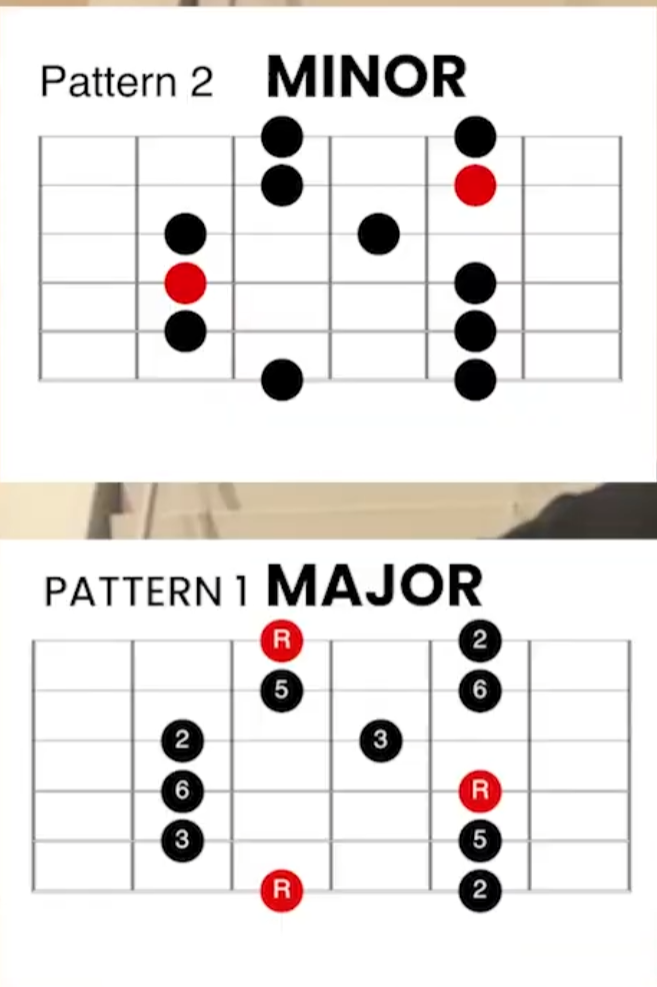
Some folks will call pattern #2 of the minor pattern #1 of the major because pattern #2 major overlaps pattern #1 minor. I prefer to see just those five patterns and know that each pattern independently can be either major or minor depending on root note locations. I tried to locate a good animation video on how this works visually, but could not find one. I might have to create one, because once you see it, you cannot unsee it.
Every pattern has a set of major root note locations and minor root note locations. This weeks lesson on the Pentatonic Cheat Code has a nice layout of the similarities in major/minor patterns that overlap. Just go to the lesson and there is a link in the brown box on the right side that you can download the pdf. Notice, there are still just those five patterns.
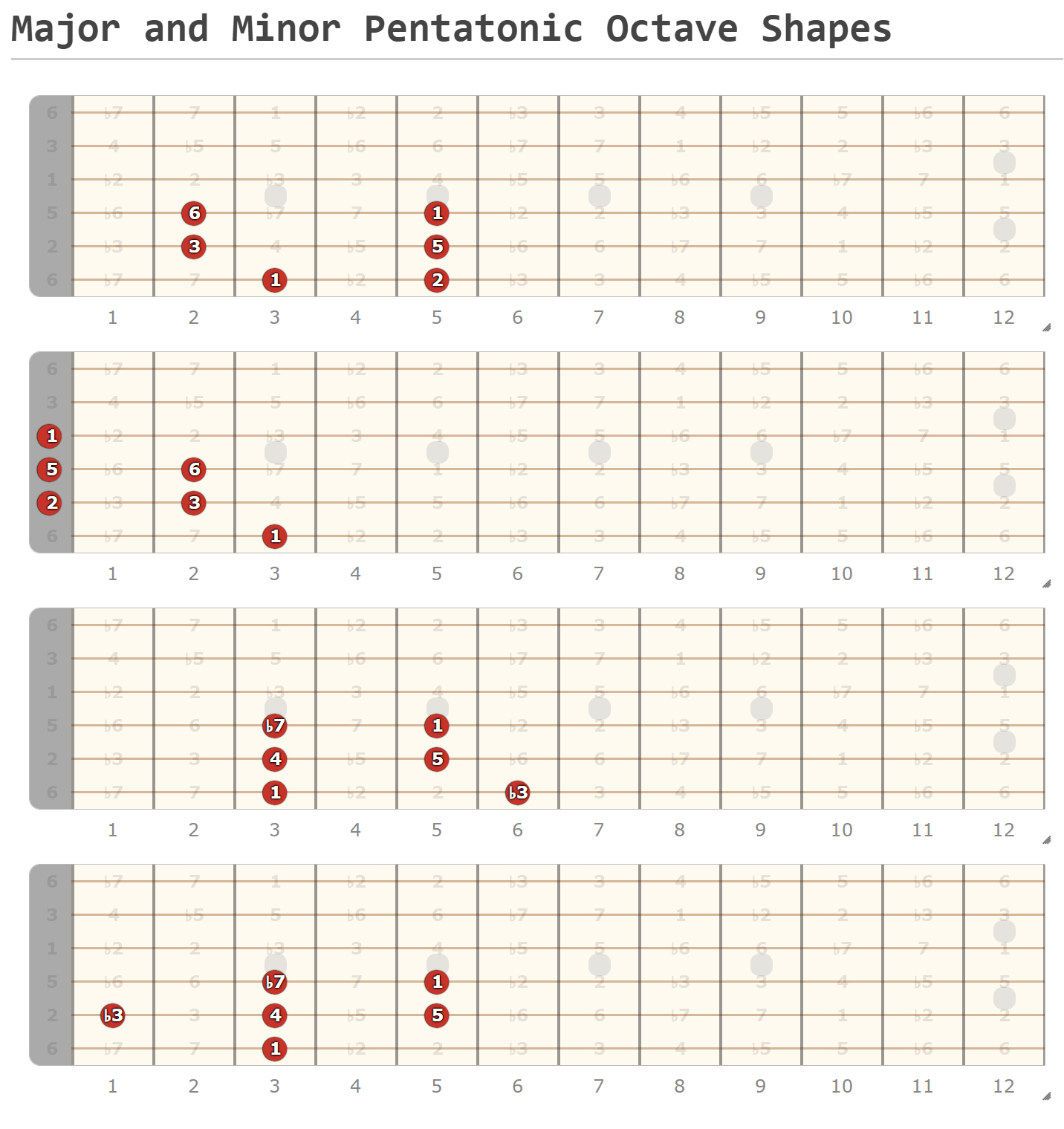
I assume you found EP436 Ultimate Guide to Pentatonic and didn’t see any diagrams for the Major scales. Maybe you didn’t view the lessons, I don’t know, but if you slide the minor patterns down three frets you get the Major version of the scales. It’s that simple.
Root note patterns >>> CAGED shapes >>> TRIAD'S. Just put in the work and watch your guitar skills soar.
-
March 17, 2026 at 7:53 am #411133
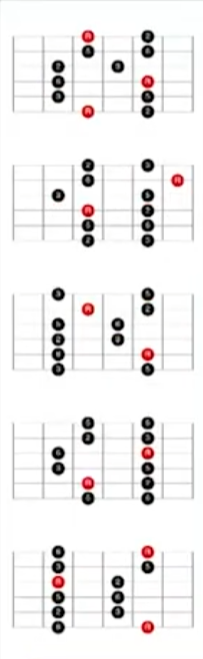
Here are some visuals for you, but you will see they are still the same exact five patterns.
Major Pentatonic
Minor Pentatonic: Note, some will call the pattern number 2 from above pattern #1 in major. I like to simply think of it as pattern #2 superimposed over pattern #1.
This is a common way that it is shown from various other sources on the internet calling pattern #2 pattern #1 again.
Root note patterns >>> CAGED shapes >>> TRIAD'S. Just put in the work and watch your guitar skills soar.
-
March 18, 2026 at 3:27 am #411179
Thanks very much.
For that information.
I thought there diagrams with the Major scale degrees on it somewhere.Thank you again.
Brendan
-
-
March 17, 2026 at 8:27 am #411146
In the G pattern, also called Pattern 1, the note under your pinky in the 6th string is the Major root note, or Major Key you’re playing in. The note under your index finger is the Minor root note or Key you’re playing in.
Example: index finger on the 5th fret, is the key of A minor. To play A Major, out your pinky on the 5th fret olw E string. Yes, it’s that simple to switch between Major and Minor. When your pinky is on the 5th fret low E, if you focus on the note under your index finger, it would be F# Minor.
-
March 18, 2026 at 3:29 am #411180
Thank you very much.
That Helps
Brendan
-
-
March 18, 2026 at 8:07 am #411186
It pays dividends to those that learn just a tiny bit of general music theory.
Major Scale: 1 2 3 4 5 6 7 (W W H W W W H)
Relative Minor: 1 2 b3 4 5 b6 b7 (W H W W H W W)
The major pentatonic just removes the 4 and 7 from the major scale: 1 2 3 5 6
The minor pentatonic just removes the 2 and 6 from the natural minor scale: 1 b3 4 5 b7And it pays even more dividends to those that learn all the basic interval shapes across strings. It’s just a series of whole, half, and minor 3rd steps.
I use the https://www.editor.guitarscientist.com online application to play around with scales and intervals visually. It allows you to put the interval numbers inside the dots or note names if you prefer. Very handy tool for enhancing your knowledge and understanding of scales and chords.
Root note patterns >>> CAGED shapes >>> TRIAD'S. Just put in the work and watch your guitar skills soar.
-
March 18, 2026 at 3:47 pm #411195
Thank you so much, I’m slowly getting my head around this.
Thanks again
Brendan
-
-
-
AuthorPosts



- You must be logged in to reply to this topic.
