Home › Forums › [NEW] Lightbulb Moments › The major pentatonic scale is the same as a minor pentatonic!?
- This topic has 15 replies, 3 voices, and was last updated 1 month, 2 weeks ago by
 Ben C.
-
AuthorPosts
-
-
August 3, 2026 at 6:08 pm #420130
To many of you seasoned theory pros, this is probably painfully obvious, but I just realised that the major pentatonic scale is the same as a minor Pentatonic scale, just with a different root note
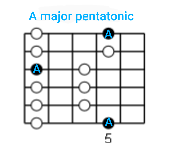
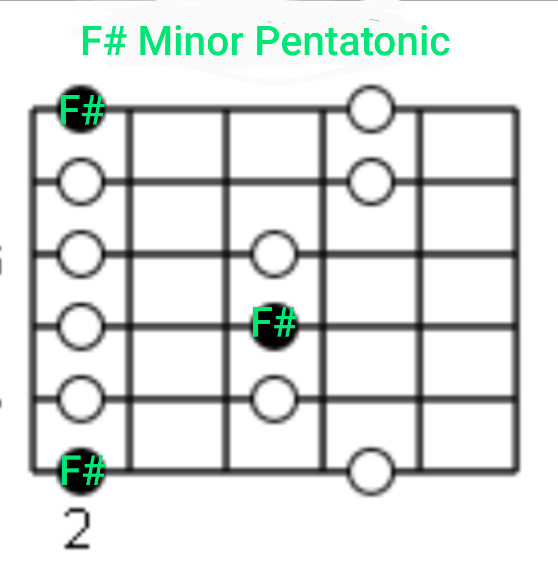
So if you’re playing, for example, an A major Pentatonic scale, this is also an F# minor scale.
From my understanding this works with all pentatonic positions and just relies on you changing what you consider your root note to be. Just move 3 frets down from your root.
So with the A note (fret 5 on E string,), if you no longer treat it as the root note of your minor Pentatonic and you go three frets down to F# (fret 2) and treat this as your new root, but keep the same pentatonic pattern, you’re now playing the F# minor pentatonic.
I’ve added two scale pattern charts for visual reference.
———————–
I figured this out after playing along with a lot of backing tracks and wondering why my major Pentatonic scales weren’t sounding right. It turns out that for years I have been playing minor Pentatonic scales believing they were major and only when I shifted my fingers up a string did it start to sound ok. So through sheer luck have I been able to improvise – my scale knowledge has been completely wrong
It goes to show that spending the time studying scales and applying them properly is incredibly important. This whole theory learning process is incredibly humbling!
-
This topic was modified 1 month, 2 weeks ago by Ben C.
-
This topic was modified 1 month, 2 weeks ago by
-
August 3, 2026 at 7:47 pm #420135
I’m so glad we got you fixed up on that issue Ben. You are correct. The root notes are the key to everything. All else is relative to the root note. As you now see, the first finger is placed on the root note for minor, and the pinky goes on the root note for major. So for the minor pentatonic, the next note is a flat 3rd (three frets), and it’s where your pinky lands.
It’s interesting to also note that in minor pentatonic the flat 7 note is always two frets behind the root note, and many players start the scale there with 1st finger on the flat 7 and play the root note with ring finger, then play two more notes on the next string with the same fingers. Then you can just slide into the main Pattern #1 with the ring finger (5th), and continue up the scale flat 7, root, flat 3rd, 4, 5, flat 7, root.
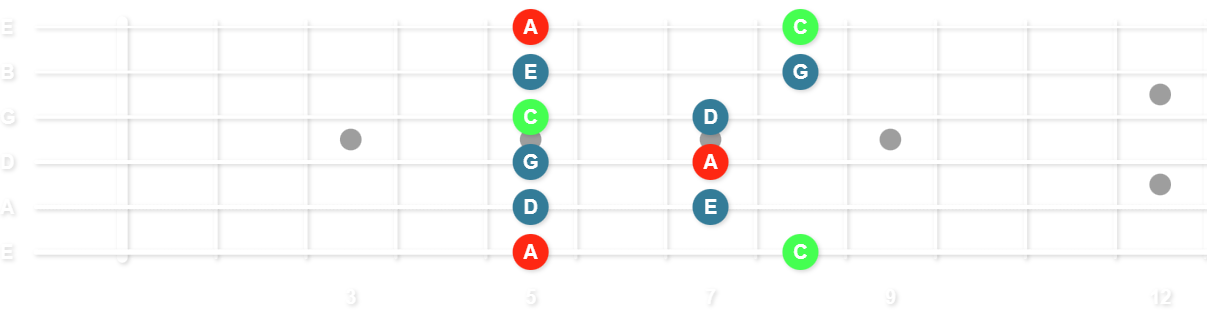
The green notes are for playing the C major scale starting from your pinky finger, or you can just use the same pattern Am with out moving anywhere. Or if you want to play A major pentatonic or F#m slide down to 1st finger on F# and pinky on A, the same exact notes for A major pentatonic now become F#m as shown in your diagram. You just start or focus on resolving on root, semi-tone bending the flat 3rd or flat 7 notes.
Root note patterns >>> CAGED shapes >>> TRIAD'S. Just put in the work and watch your guitar skills soar.
-
This reply was modified 1 month, 2 weeks ago by
 Michael Krailo.
-
This reply was modified 1 month, 2 weeks ago by Michael Krailo.
-
This reply was modified 1 month, 2 weeks ago by
-
August 3, 2026 at 8:06 pm #420139
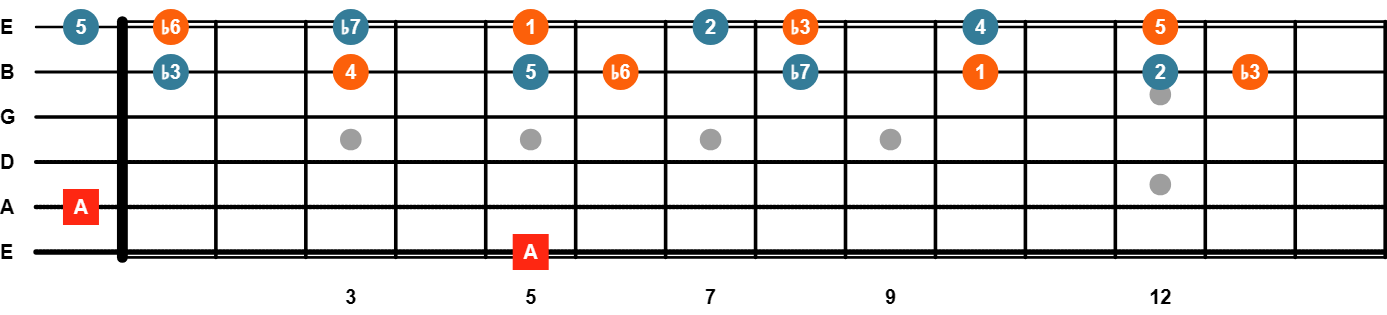
It’s also possible to play both major and minor pentatonic in the same place on the fret board, but the major pattern #2 is superimposed over the minor pattern #1. That concept blew me away the first time I realized how that works. Notice the root notes stay in alignment and do not move.
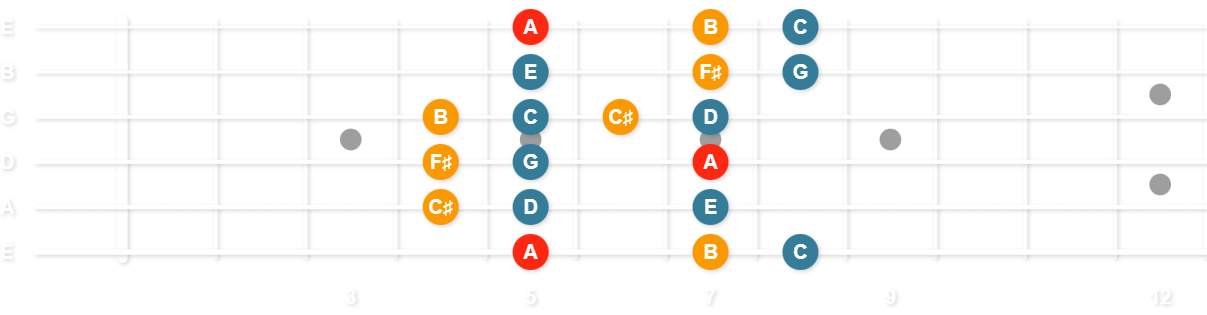
The orange notes are part of pattern #2 and allow you to access all the major pentatonic notes right inside pattern #1 minor pentatonic. Your middle finger becomes the root, if switching to major pentatonic. This takes some getting used to, but once you have it, the ability to mix major and minor together is much easier than sliding around all over.
Root note patterns >>> CAGED shapes >>> TRIAD'S. Just put in the work and watch your guitar skills soar.
-
This reply was modified 1 month, 2 weeks ago by Michael Krailo.
-
This reply was modified 1 month, 2 weeks ago by Michael Krailo.
-
This reply was modified 1 month, 2 weeks ago by
-
August 3, 2026 at 8:53 pm #420143
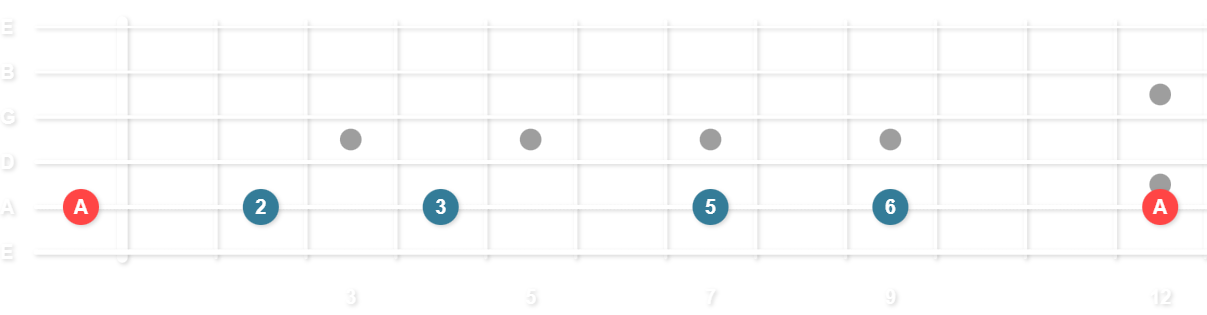
Here is a very good visual to start with when looking at the pentatonic scales in their most basic form. The first thing to take note of is the major 2nd interval right after the root note is by definition major and the two whole steps up to the major 3rd is a dead give away this is major pentatonic. In fact it is the first three notes in the full major scale.
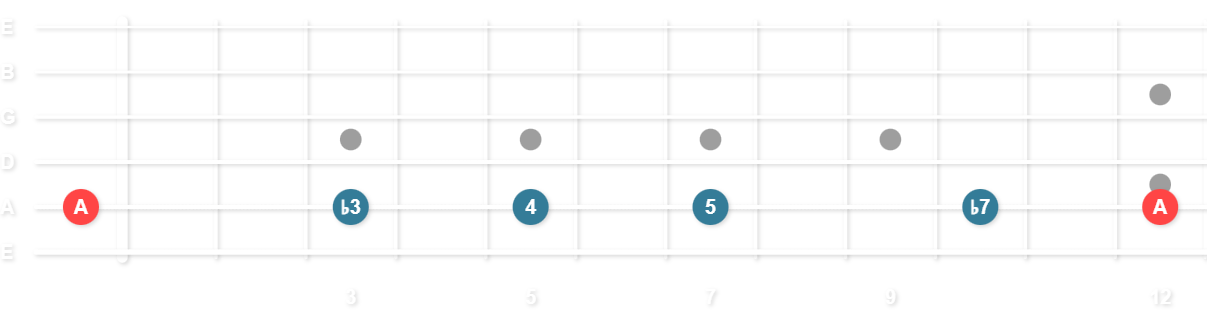
There are no two notes that are right next to each other and both patterns include the 5th interval. The minor pentatonic will always jump right to the minor 3rd note (C in this case). The spacing of a minor 3rd is always exactly 3 frets if on a single string as shown. Then up a whole step to 4, whole step to 5, and 3 fret jump to b7.
Root note patterns >>> CAGED shapes >>> TRIAD'S. Just put in the work and watch your guitar skills soar.
-
August 4, 2026 at 6:40 am #420146
Yes Ben when you start making these connections it does make the Easy Pattern so versatile. But you can do that with all the other patterns, as there are only 5 pentatonic patterns .Each pattern has a major and minor relationship defined by the root note, (=10 scales) and through using CAGED.
The video below was done as a monthly challenge – lightbulbs. ( there is a slight root note error at 43sec mark)
-
This reply was modified 1 month, 2 weeks ago by
 Laurel C.
-
August 5, 2026 at 5:41 am #420172
Thanks for this. That’s my homework for today!
-
This reply was modified 1 month, 2 weeks ago by
-
August 4, 2026 at 8:25 am #420148
There are a lot of connections that can be made the more you look at it, but it really boils down to what key you are in. So if we are in the key of C, then the relative minor is always going to be the sixth degree of the C major scale or dropping back three frets to A (Am). The major scale is the foundation for it all, so that’s why it’s important to know your major scale.
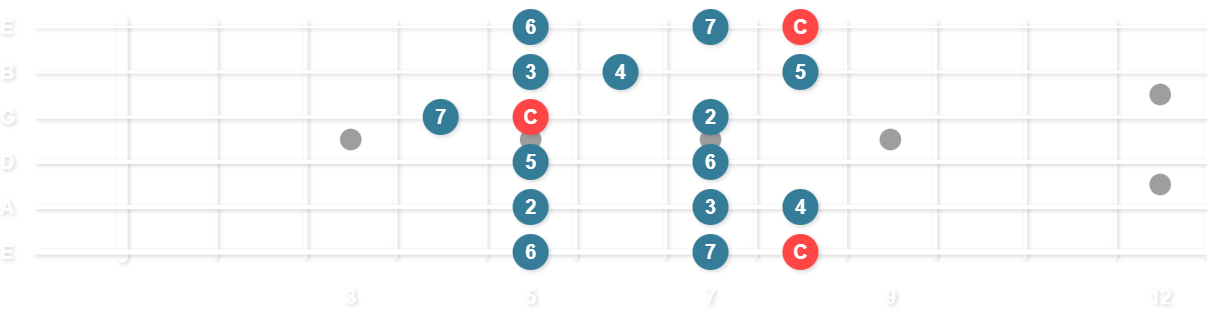
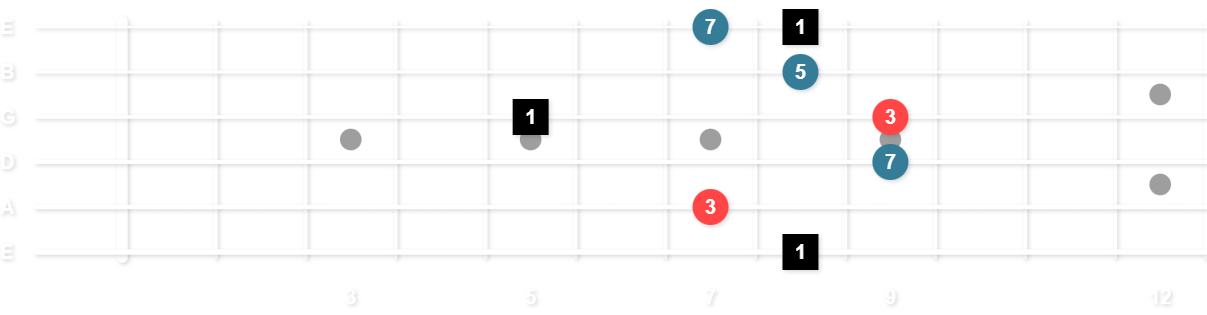
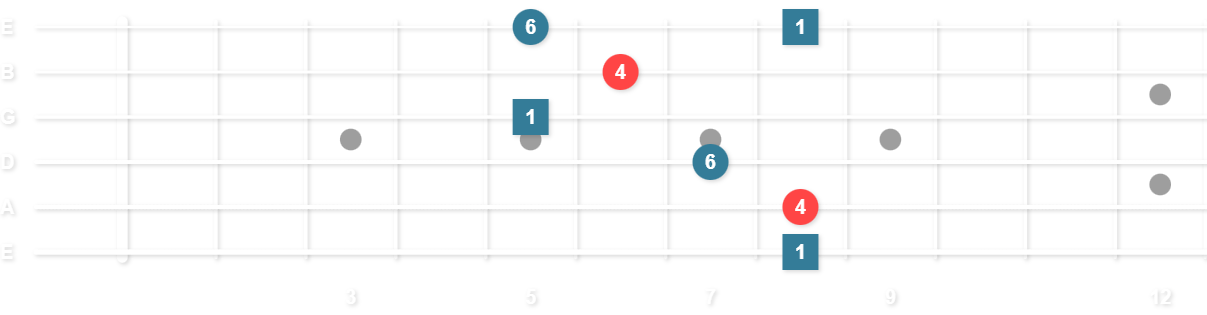
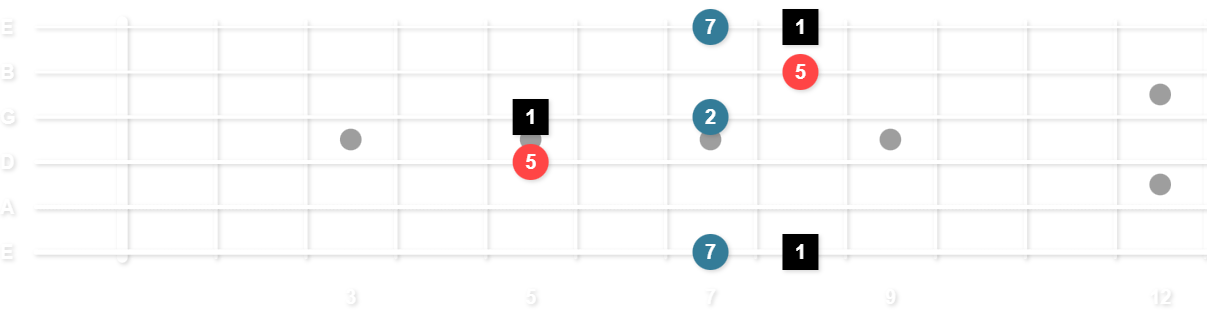
The full C major scale fits nicely over the Am pentatonic pattern #1. Here is that diagram using the number system. The interval numbers are very important in my opinion. It goes hand in hand with CAGED. Since they are missing from that video linked above it misses the most important relationships that make up a chord family and where they come from, but it does show the matching root note patterns and how the two different patterns link together very well. First just get the following concept down really good as I’m showing hear and then that major/minor overlapping stuff will make more sense later.
Full C Major Scale Pattern that fits over the Relative Am pentatonic we all know and love.
Notice the 4 and 7 are the notes that are missing from the standard major pentatonic scale.
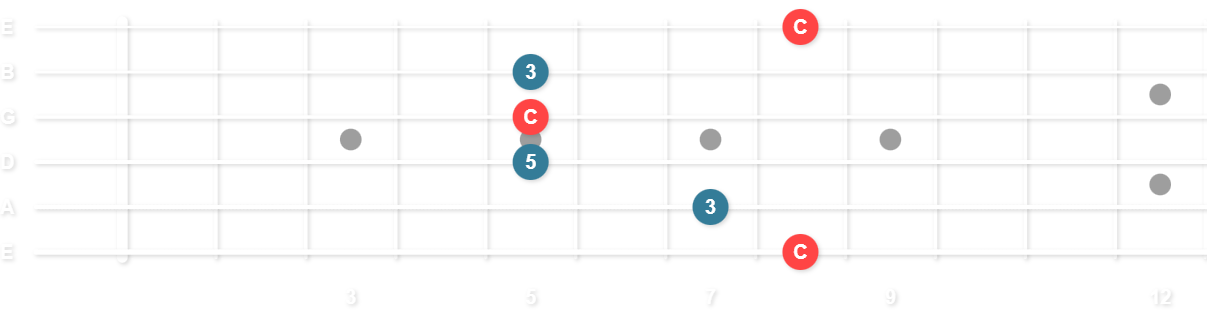
G-Shaped C chord is pinky finger focused and other root note is on the G string.
Am-Shaped TWO chord. Dm
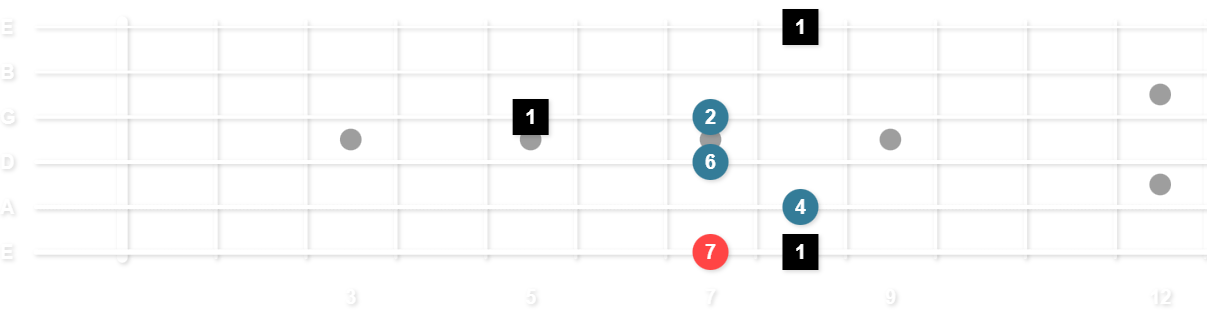
Black colored notes that show the KEY of the chord family and are not part of the chord.
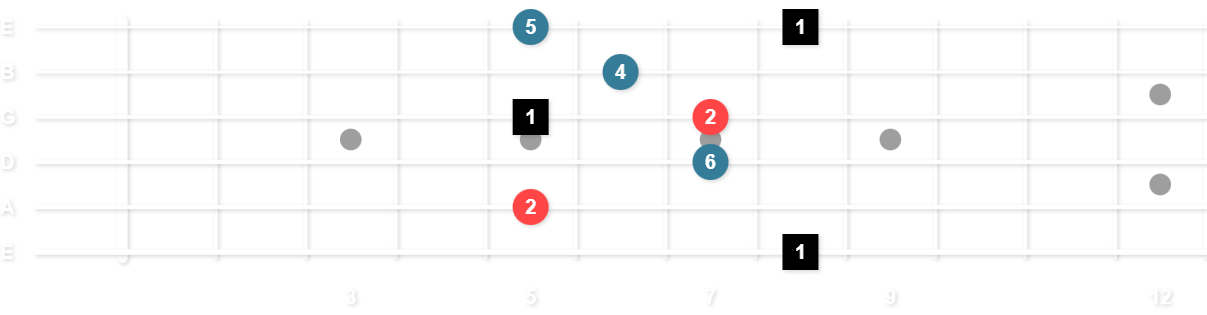
Am-Shaped THREE chord. Bm
C-Shaped FOUR chord. F
D-Shaped FIVE chord with root on the D string. G
Em-Shaped SIX chord (relative minor) with roots on 6th, 4th, and 1st strings.
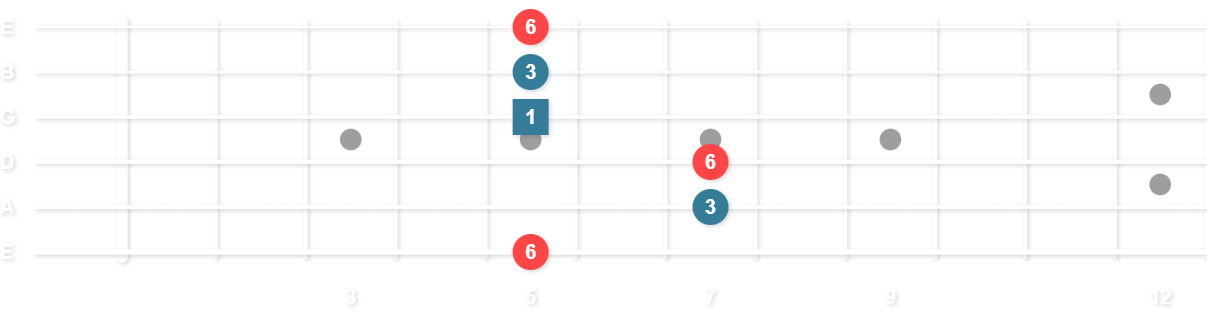
Half Diminished SEVEN chord. Bm7b5. Chord formula (1-b3-b5-b7)
Root note patterns >>> CAGED shapes >>> TRIAD'S. Just put in the work and watch your guitar skills soar.
-
This reply was modified 1 month, 2 weeks ago by Michael Krailo.
-
This reply was modified 1 month, 2 weeks ago by
-
August 4, 2026 at 5:37 pm #420160
For completeness, I’m attaching the other diagrams for key of Am.
Full Am Natural Scale. Removing the 2 and b6 (B & F) give the good old Am pentatonic scale.
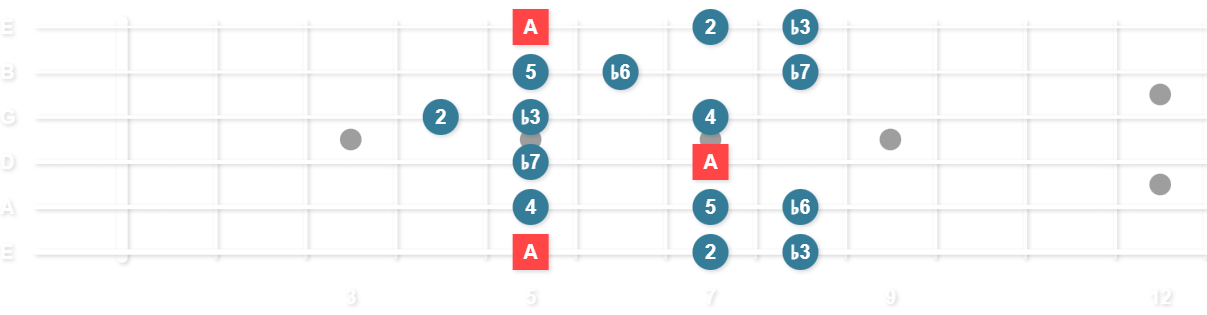
Em Shape ONE chord is Am barre chord.

Half Diminished TWO chord is Bm7b5

G-Shape THREE chord is C

Am-Shape FOUR chord is Dm

Am-Shape FIVE chord is Em. Optionally the Dm-Shape version of Em will also work

D-Shape SIX chord is F

D-Shape SEVEN chord is G

Root note patterns >>> CAGED shapes >>> TRIAD'S. Just put in the work and watch your guitar skills soar.
-
This reply was modified 1 month, 2 weeks ago by Michael Krailo.
-
August 5, 2026 at 5:41 am #420171
Michael you never fail to disappoint with your sharing of theory. Always appreciated! I just wish I knew how to process it all so it stuck!
-
This reply was modified 1 month, 2 weeks ago by
-
August 5, 2026 at 1:44 pm #420174
Michael you never fail to disappoint with your sharing of theory. Always appreciated! I just wish I knew how to process it all so it stuck!
It’s just a moveable framework to see where your chord tones are within a given key. So the next time you are playing a song, or backing track, slide the root note to the key of the song and study how to play the chords in the backing track first. No scales for now, just get the chord shapes down first. Think rhythm parts. Then rinse and repeat for another song or backing track until you get used to it.
For the song we are working on now, there are literally only two chords (Am and Dm), so you don’t need to think much further than that at first. When you add in a little bit of harmonizing of the chords in between the I and IV chord and the octave I, you can improvise some really great ideas.
Again, here is the harmonized 3rds for key of Am on just the 2nd and 3rd strings to keep it simple. There are only two patterns, 2-fret pattern and the 1-fret pattern.
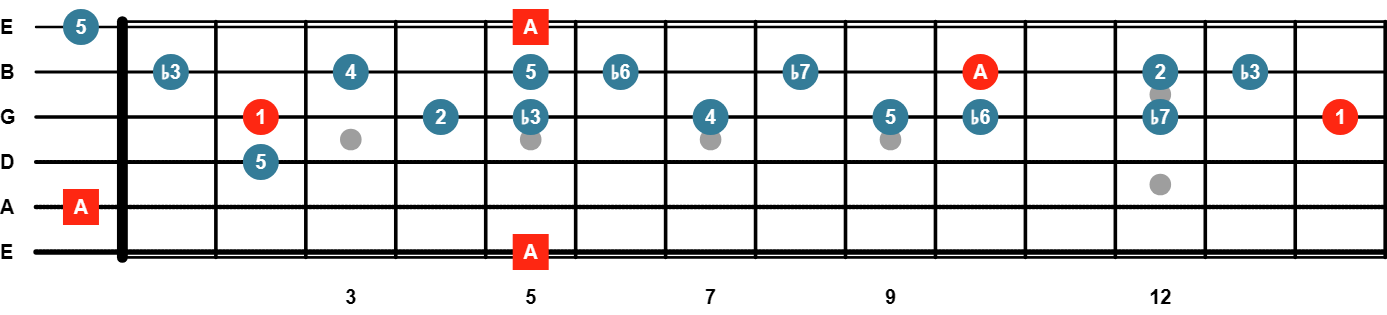
Root note patterns >>> CAGED shapes >>> TRIAD'S. Just put in the work and watch your guitar skills soar.
-
August 5, 2026 at 4:42 pm #420176
Might as well show you the other two patterns, as they apply in these two important interval shapes on all other string sets except for the G & B strings. Notice the two sets of colors light blue and orange are there just to make it clear which two notes are played together. So the first set of blue notes is part of the Am triad, but the interval is a major 3rd. That is a bit confusing, but that interval shape spacing between notes is a major 3rd (part of C chord III). The next set of notes in orange is the classic minor 3rd interval pattern of three semitones, which you can visually see from the 4 to the b6 on the B-String.
Just play the first major 3rd pattern, and you will hear the major quality of those two notes together. Plat the next set of notes, and you can clearly hear that minor sound. So get used to this sequence of patterns and work them into any song that is in the key of Am. As a test question, which frets contain the two note pattern that represents the Am chord?
Root note patterns >>> CAGED shapes >>> TRIAD'S. Just put in the work and watch your guitar skills soar.
-
August 7, 2026 at 11:41 pm #420205
Hey Michael, have you thought about making video tutorials? because you should as this would be a great avenue for you to translate your knowledge into teachable parts . By demonstrating it with a video with diagrams and with your playing and voice over you could relay the message into digestible chunks. Put yourself into Brian’s position ‘How Can I Get this Message Across for the Active Melody Community to Understand”. Give it a go… and put in on the forum in ‘Lightbulbs’ or Members teaching Members. Could be the start of something wonderful for you.
-
August 8, 2026 at 4:52 am #420211
Agreed. I would definitely watch, especially as I struggle to learn from written theory alone
-
-
-
August 6, 2026 at 2:41 am #420184
I’ve just woken up so will have to digest this and figure it out haha
-
August 8, 2026 at 6:37 am #420214
Hey Michael, have you thought about making video tutorials? because you should as this would be a great avenue for you to translate your knowledge into teachable parts . By demonstrating it with a video with diagrams and with your playing and voice over you could relay the message into digestible chunks. Put yourself into Brian’s position ‘How Can I Get this Message Across for the Active Melody Community to Understand”. Give it a go… and put in on the forum in ‘Lightbulbs’ or Members teaching Members. Could be the start of something wonderful for you.
Absolutely, this journey has had so many highlights for me along the way, I would be foolish not to share. The whole process take time though. So If I do put something out there, it might be somewhat spotty in nature. I’ll tell you more in a PM.
And Ben, you know I got your back. So you are getting the royal treatment at the moment. Believe it or not, it’s actually helping me out just as much, if not more as it helps you.
Root note patterns >>> CAGED shapes >>> TRIAD'S. Just put in the work and watch your guitar skills soar.
-
August 8, 2026 at 6:46 am #420215
Ha absolutely! I was singing your praises to my bass teacher yesterday
-
-
-
AuthorPosts



- You must be logged in to reply to this topic.
